Skip to content

Sleep Disorders Advice & Help

Menu
  • Home
  • Blog
  • Videos
  • Bedwetting / Sleep Enuresis
  • Circadian Rhythm Disorders
    • Advanced Sleep Phase Syndrome
    • Bright Light Therapy
    • C.Rhythm Treatment Methods
    • Chronotherapy
    • Circadian Rhythm & Depression
    • Circadian Rhythm & Teenagers
    • Circadian Rhythm & Weight Gain
    • Delayed Sleep Phase Syndrome
      • Children & Teenagers
      • DSPS Treatment Methods
      • DSPS Videos
      • Herbs & Medicine
      • Symptoms & Signs
    • General C.Rhythm Articles
    • Hormones & Circadian Rhythm
      • Melatonin
      • Pineal Gland
    • Irregular Sleep-Wake Rhythm
    • Jet Lag
    • Non-24-Hour Sleep-Wake Syndrome
    • Shift Work Sleep Disorder
    • Sleep Cycle Solutions
    • Sleep Phase Chronotherapy
  • CPAP
    • About CPAP Accessories
    • CPAP How to & Guides
    • CPAP Mask
    • CPAP Product Reviews
    • CPAP Question & Answer
    • General CPAP Articles
  • Hypersomnia
    • Recurrent Hypersomnia
  • Hypopnea Syndrome
  • Insomnia
    • Insomnia Causes & Triggers
    • Insomnia Q&A
    • Insomnia Solutions
    • Insomnia Treatment
  • Narcolepsy
    • Narcolepsy Q&A
    • Narcolepsy Treatments
  • Night Terror & Sleep Terror
  • Pillows for Sleep
    • Side Sleeper Pillows
  • Sleep Apnea
    • Central Sleep Apnea
      • CSA Causes & Triggers
      • CSA Children & Teenagers
      • CSA Symptoms & Signs
      • CSA Treatment Methods
    • Sleep apnea masks
    • Sleep apnea symptoms
    • Sleep apnea treatment
    • Sleeping problems
    • Sleeping Q&A
  • Sleep deprivation
  • Sleep Disorders
    • Sleep Disorders Q&A
  • Snoring
    • Anti-Snore Solutions
    • Snoring Q&A
  • z Other Disorders
    • Exploding Head Syndrome
    • Nightmares
    • Nocturnal Eating Sleep Disorders
    • Sleep Paralysis
    • Sleep Talking / Somniloquy
    • Sleeping Sickness
    • Sleepwalking / Somnambulism
    • Somniphobia
    • Teeth Grinding (Bruxism)
    • Uncategorized
Menu

How is sleep apnea treated?

Posted on August 14, 2011

The goals of treating sleep apnea are to restore regular breathing during sleep and relieve the symptoms caused by sleep apnea, including loud and chronic snoring, daytime sleepiness and problems staying awake while driving, morning headaches, problems with memory, learning or concentrating, psychological problems, etc.  The treatment of sleep apnea is individualized to each patient, but usually starts with the following behavioral modifications:

  • Weight loss – even a moderate amount of weight loss (5 – 10 lbs) may provide a significant improvement to sleep apnea
  • Sleeping on one’s side – this practice decreases the likelihood of airway closure during sleep
  • Drug use – Alcohol and the other drugs listed above increase chances of developing and/or worsening sleep apnea
  • Nasal sprays or allergy medications – may provide additional treatment to the airway inflammation and dryness

A second treatment option for patients with mild-to-moderate sleep apnea is the use of oral or dental appliances.  A dentist or orthodontist creates a custom-fit device specific to each patient based on their individual anatomical and physiological need.  These appliances are used to adjust the lower jaw and tongue to help keep the airway open while sleeping.

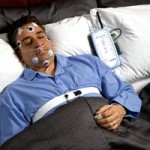
The most common, and often most recognizable, treatment for moderate-to-severe sleep apnea is through the use of continuous positive airway pressure, or CPAP.  A small machine delivers CPAP via a sealed mask placed over the mouth and nose or just the nose alone.  The flow of air provided by the CPAP travels down the throat and keeps the airway open.  An image is provided below.

While CPAP remains the most common and often most effective treatment for patients with moderate-to-severe sleep apnea, its use is associated with side effects.  Some patients may experience dry or stuffy nose, irritated skin on the face, sore eyes, and headaches.  Also, if the airflow isn’t properly adjusted initially or over time, stomach bloating and discomfort may occur.  Patients that do not respond well to the use of a CPAP machine initially or over the course of time may be treated with bi-level positive airway pressure, or BiPAP.  BiPAP differs because the machine slowly ramps pressure and airflow up and down for both inhalation and exhalation versus the continuous delivery of pressure and airflow from the CPAP machine.  The BiPAP settings are also based on individual PSG measurements taken during the sleep study.

The last line in treatment of moderate-to-severe sleep apnea involves surgical procedures that widen breathing passages.  However, these procedures are invasive and reserved for patients that do not respond to other procedures.

Also, no drug treatment currently exists that is approved for the treatment of sleep apnea.

Complications – What happens with untreated sleep apnea?

Untreated sleep apnea has been linked with several serious and potentially life-threatening diseases and health conditions.  These conditions are listed below:

  • Cardiovascular Disease – sleep apnea is associated with an increase risk for each of the following:
  • High blood pressure
  • Heart attack
  • Stroke
  • Irregular heartbeats (atrial fibrillation)
  • Heart failure
  • Heart surgery
  • Diabetes – sleep apnea is associated with impaired glucose tolerance and insulin resistance
  • Obesity
    • Pulmonary hypertension
  • Driving accidents/fatalities


Related Posts

  • San’o-Shashin-To for Sleep ApneaSan’o-Shashin-To for Sleep Apnea
  • What is Hypersomnia?What is Hypersomnia?
  • Common Sleep Disorders In TeensCommon Sleep Disorders In Teens
  • How Excessive Daytime Sleepiness Can Ruin Your LifeHow Excessive Daytime Sleepiness Can Ruin Your Life
  • Three Categories of Sleep DisordersThree Categories of Sleep Disorders
  • How to Diagnose Sleep ApneaHow to Diagnose Sleep Apnea

Popular Posts

  • What Are The Ingredients In Red Wine That Cause Insomnia And Other Sleep Disorders What Are The Ingredients In Red Wine That Cause Insomnia
  • Signs of Deep Sleep – Wavelengths Sleep Stages | How to Recognize Deep Sleep?
  • Side Sleeper Pro Pillow Review Image 1 Side Sleeper Shoulder Pain
  • Man snoring with mouth closed next to tired woman Snoring With Mouth Closed
  • How To Learn To Sleep On Your Side pillow with an opening for arm How To Learn To Sleep On Your Side
  • Stopping Drooling Coping with CPAP Mask Drooling
  • lady sleeping on her side Sore Ear After Sleeping | Side Sleeper Ear Pain
  • nocturnal lagophthalmos Why Do People Sleep With Their Eyes Open?
  • Side Sleeper Pillow Z by Malouf 100 Natural Talalay Latex Zoned Pillow 1 Top 3 Side Sleeper Pillow Choices | Mini-REVIEWS
  • Reset Your Circadian Rhythm Naturally.jpg Reset Your Circadian Rhythm Naturally

Categories

  • Bedwetting / Sleep Enuresis (26)
  • Circadian Rhythm Disorders (203)
    • Advanced Sleep Phase Syndrome (5)
    • Bright Light Therapy (5)
    • C.Rhythm Treatment Methods (12)
    • Chronotherapy (5)
    • Circadian Rhythm & Depression (5)
    • Circadian Rhythm & Teenagers (11)
    • Circadian Rhythm & Weight Gain (5)
    • Delayed Sleep Phase Syndrome (67)
      • Children & Teenagers (5)
      • DSPS Treatment Methods (15)
      • DSPS Videos (2)
      • Herbs & Medicine (5)
      • Symptoms & Signs (5)
    • General C.Rhythm Articles (29)
    • Hormones & Circadian Rhythm (25)
      • Melatonin (17)
      • Pineal Gland (6)
    • Irregular Sleep-Wake Rhythm (6)
    • Jet Lag (18)
    • Non-24-Hour Sleep-Wake Syndrome (4)
    • Shift Work Sleep Disorder (5)
    • Sleep Cycle Solutions (9)
    • Sleep Phase Chronotherapy (3)
  • CPAP (66)
    • About CPAP Accessories (5)
    • CPAP How to & Guides (5)
    • CPAP Mask (9)
    • CPAP Product Reviews (15)
    • CPAP Question & Answer (6)
    • General CPAP Articles (30)
  • Hypersomnia (13)
    • Recurrent Hypersomnia (3)
  • Hypopnea Syndrome (2)
  • Insomnia (69)
    • Insomnia Causes & Triggers (17)
    • Insomnia Q&A (7)
    • Insomnia Solutions (36)
    • Insomnia Treatment (13)
  • Narcolepsy (24)
    • Narcolepsy Q&A (5)
    • Narcolepsy Treatments (13)
  • Night Terror & Sleep Terror (13)
  • Pillows for Sleep (12)
    • Side Sleeper Pillows (12)
  • Sleep Apnea (118)
    • Central Sleep Apnea (37)
      • CSA Causes & Triggers (7)
      • CSA Children & Teenagers (4)
      • CSA Symptoms & Signs (4)
      • CSA Treatment Methods (7)
    • Sleep apnea masks (5)
    • Sleep apnea symptoms (9)
    • Sleep apnea treatment (10)
    • Sleeping problems (21)
    • Sleeping Q&A (21)
  • Sleep deprivation (39)
  • Sleep Disorders (109)
    • Sleep Disorders Q&A (26)
  • Snoring (36)
    • Anti-Snore Solutions (11)
    • Snoring Q&A (17)
  • z Other Disorders (68)
    • Exploding Head Syndrome (5)
    • Nightmares (5)
    • Nocturnal Eating Sleep Disorders (2)
    • Sleep Paralysis (14)
    • Sleep Talking / Somniloquy (7)
    • Sleeping Sickness (2)
    • Sleepwalking / Somnambulism (13)
    • Somniphobia (3)
    • Teeth Grinding (Bruxism) (12)
    • Uncategorized (7)

Tag Cloud

body clock Central Sleep Apnea circadian clock Circadian rhythm circadian rhythms circadian rhythm sleep disorder circadian rhythm sleep disorders CPAP cpap machine cpap mask daytime sleepiness Delayed sleep phase syndrome different time zones DSPS excessive sleepiness herbal remedies hypnagogic hallucinations insomnia internal body clock jet lag Lack of sleep medical condition melatonin Narcolepsy nocturnal enuresis Obstructive Sleep Apnea sleep sleep apnea Sleep apnea symptoms Sleep apnea treatment sleep at night Sleep Deprivation sleep disorder sleep disorders sleeping disorder sleeping disorders sleeping habits sleeping problems sleeping time sleeplessness sleep problems snoring sound sleep stress types of sleep disorders

Other Links

  • About Us
  • Contact Us
  • Privacy Policy
©2026 Sleep Disorders Advice & Help | Design: Newspaperly WordPress Theme