
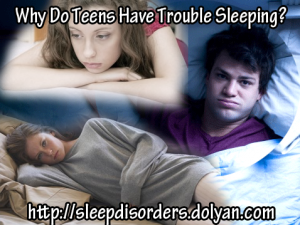
Research shows that teens need 8 1/2 to more than 9 hours of sleep each night. You don’t need to be a math whiz to figure out that if you wake up for school at 6:00 AM, it means you have to go to bed at 9:00 PM to reach the 9-hour mark. Studies have found that many teens have trouble falling asleep that early, though. It’s not because they don’t want to sleep. It’s because their brains naturally work on later schedules and aren’t ready for bed.
The body’s circadian rhythm
During adolescence, the body’s circadian (pronounced: sur-kay-dee-un) rhythm (sort of like an internal biological clock) is reset, telling a teen to fall asleep later at night and wake up later in the morning. This change in the circadian rhythm seems to be due to the fact that melatonin, a hormone that regulates sleeping and waking patterns, is produced later at night in teens than it is for kids and adults, making it harder for teens to fall asleep. This phenomenon has a medical name: delayed sleep phase syndrome. Although it’s common, delayed sleep phase syndrome doesn’t affect every teen.
 Messing up the body clock

Changes in the body clock aren’t the only reason teens lose sleep, though. Lots of people have insomnia – trouble falling or staying asleep. The most common cause of insomnia is stress. But all sorts of things can lead to insomnia, including physical discomfort (the stuffy nose of a cold or the pain of a headache, for example), emotional troubles (like family problems or relationship difficulties), and even sleeping environment (a room that’s too hot, cold, or noisy).
Teens and insomnia
It’s common for everyone to have insomnia from time to time. But if insomnia lasts for a month or longer with no relief, then health care providers consider it chronic. Chronic insomnia can be caused by problems like depression. People with chronic insomnia can often get help for their condition from a health care provider, therapist, or other counselor.
For some people, insomnia can be made worse by worrying about the insomnia itself. A brief period of insomnia can build into something longer lasting when a person becomes anxious about not sleeping or worried about feeling tired the next day. Health care providers call this psychophysiologic (pronounced: sye-ko-fih-zee-uh-lah-jik) insomnia.
Related Posts

 Familial Advanced Sleep-Phase Syndrome
 Why are Teenagers at More Risk for Delayed Sleep Phase Syndrome?
 How Morning Bright Light Therapy Can Help You In DSPS
 Delayed Sleep Phase Syndrome | A Sleep Disorder Which Is Not Age Specific
  Switch To Litebook Elite For Effective And Easy Light Therapy For DSPS
 Sleep And Wake Up Process Is Controlled Through Circadian And Homeostatic Processes