Skip to content

Sleep Disorders Advice & Help

Menu
  • Home
  • Blog
  • Videos
  • Bedwetting / Sleep Enuresis
  • Circadian Rhythm Disorders
    • Advanced Sleep Phase Syndrome
    • Bright Light Therapy
    • C.Rhythm Treatment Methods
    • Chronotherapy
    • Circadian Rhythm & Depression
    • Circadian Rhythm & Teenagers
    • Circadian Rhythm & Weight Gain
    • Delayed Sleep Phase Syndrome
      • Children & Teenagers
      • DSPS Treatment Methods
      • DSPS Videos
      • Herbs & Medicine
      • Symptoms & Signs
    • General C.Rhythm Articles
    • Hormones & Circadian Rhythm
      • Melatonin
      • Pineal Gland
    • Irregular Sleep-Wake Rhythm
    • Jet Lag
    • Non-24-Hour Sleep-Wake Syndrome
    • Shift Work Sleep Disorder
    • Sleep Cycle Solutions
    • Sleep Phase Chronotherapy
  • CPAP
    • About CPAP Accessories
    • CPAP How to & Guides
    • CPAP Mask
    • CPAP Product Reviews
    • CPAP Question & Answer
    • General CPAP Articles
  • Hypersomnia
    • Recurrent Hypersomnia
  • Hypopnea Syndrome
  • Insomnia
    • Insomnia Causes & Triggers
    • Insomnia Q&A
    • Insomnia Solutions
    • Insomnia Treatment
  • Narcolepsy
    • Narcolepsy Q&A
    • Narcolepsy Treatments
  • Night Terror & Sleep Terror
  • Pillows for Sleep
    • Side Sleeper Pillows
  • Sleep Apnea
    • Central Sleep Apnea
      • CSA Causes & Triggers
      • CSA Children & Teenagers
      • CSA Symptoms & Signs
      • CSA Treatment Methods
    • Sleep apnea masks
    • Sleep apnea symptoms
    • Sleep apnea treatment
    • Sleeping problems
    • Sleeping Q&A
  • Sleep deprivation
  • Sleep Disorders
    • Sleep Disorders Q&A
  • Snoring
    • Anti-Snore Solutions
    • Snoring Q&A
  • z Other Disorders
    • Exploding Head Syndrome
    • Nightmares
    • Nocturnal Eating Sleep Disorders
    • Sleep Paralysis
    • Sleep Talking / Somniloquy
    • Sleeping Sickness
    • Sleepwalking / Somnambulism
    • Somniphobia
    • Teeth Grinding (Bruxism)
    • Uncategorized
Menu
Night Terrors in Children | Pavor Nocturnus

Night Terrors in Children | Pavor Nocturnus

Posted on July 29, 2011

Night terrors in children also known as Pavor Nocturnus is a common sleep disorder caused due to the arousal of a specific part of the brain. This condition is found with an increased frequency during the first few years of the child. The frequency of night terrors, usually decrease in number or go away completely by the time adolescence is reached.

Around 15% of the child population suffer from this condition. Most children experience an episode or two of night terrors in a month, but the condition is frequent in about 3% of the population. Night terrors in children affect both male and female children equally.

Night terrors in Children – Information and Symptoms

night terrors in children little boy
Child showing an episode of night terror

Night terrors in children, is a sleeping disorder which causes a feeling of dread or terror in children. It occurs due to the arousal of the brain. You should not confuse this disorder with nightmares which are just bad dreams. This condition usually occurs at the first third of the night (between 12am and 2am)

Night terror symptoms you may observe in your child:

  • Children usually bolt upright with their eyes wide open.
  • They thrash around in a violent manner, have a look of panic and fear and scream.
  • Increased sweating.
  • Increased heart rate.
  • Increased breathing rate.
  • Children suffering from the condition will also be extremely confused during the episode, will not be consolable and will usually not recognise others.
  • Finally after the night terror episode is passed, the child will usually go back to sleep with no memory of the episode.

Sleep Walking in Children – A Serious Symptom!

Sleep walking in children is a symptom which a few children who suffer from night terrors show. This occurs because the part of the brain that controls motor function is aroused. Children can simply walk around in their room or even leave the house during an episode. To ensure that sleep walking in children does not harm them, the door to their rooms should be locked and the windows closed. Additionally any object which they may use to hurt themselves should be removed. Sleep walking and night terrors in children may be related to each other since both are caused due to the arousal of a specific part of the brain.

VIDEO: “Night Terrors: How to Identify and What to Do “
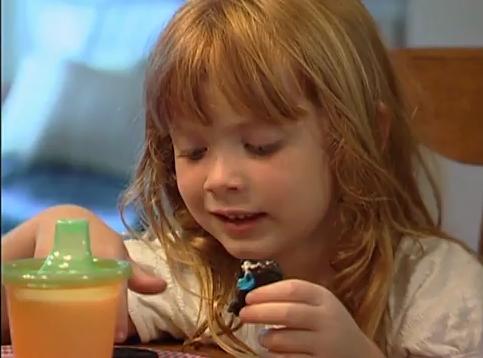
night terrors in children little girl
Little girl who suffers from night terror

night terrors in children little girl 2
Little girl having a night terror

night terrors in children MD henry shapiro
MD Henry Shapiro advising and explaining about night terrors

Sleep Paralysis in Children:

Sleep paralysis is a sleeping condition which a few children suffer from. Those who suffer from it will not be able to move for long periods, speak for long periods. The condition is considered to be hereditary and can be brought on by stress. You should consult your doctor for medication and treatments if your child suffers from this condition.

Causes of Night Terrors:

While the exact cause of the condition may not be pin pointed, it is usually caused due to:

  • Pavor Nocturnus (night terrors) has a strong genetic component; it usually runs in families and is transferred via parents to their children.
  • A period of emotional stress and conflict and tension.
  • In some cases a fever may set off the terror episode.
  • At times even the lack of sleep causes night terrors in children.

Treatments for night terrors in children are many, based on the frequency of the episode, how much it affects the peaceful sleep of the child your doctor may prescribe different cures.

Different Treatment Options:

Usually the cause of night terrors in children is overtiredness. In such cases no action needs to be taken other than creating a sleep timetable which allows for adequate sleep. However if the night terrors occurs on a regular basis, other symptoms such as sleep paralysis, sleep walking occurs then you should contact your paediatrician for help.

Treatments which usually work are:

  1. Comfort and care from the parents of the child.
  2. Reducing daily stress, tension.
  3. Counselling and talk therapy.
  4. In rare cases, benzodiazepine medication may be prescribed.

These night terrors cause no physical or psychological damage to the child. Thus if the condition occurs rarely without sleep walking and sleep paralysis, the best cure would be to offer care and support since children usually grow out of the condition as they reach adolescence.

Night terrors in children is a disorder which unless very frequent you do not need to worry about.

Related Posts

  • 7 Most Amazing Facts about Dreams7 Most Amazing Facts about Dreams
  • 10 Narcolepsy Facts You Should Know About10 Narcolepsy Facts You Should Know About
  • Nightmares In Children Should Be Dealt Firmly & With CareNightmares In Children Should Be Dealt Firmly & With Care
  • Common Sleep Disorders In TeensCommon Sleep Disorders In Teens
  • Causes of Nocturnal Panic AttackCauses of Nocturnal Panic Attack
  • The Relationship Between Sleep Paralysis And SchizophreniaThe Relationship Between Sleep Paralysis And Schizophrenia

4 thoughts on “Night Terrors in Children | Pavor Nocturnus”

  1. Veronica says:
    August 16, 2011 at 4:37 am

    A friend of mine’s kid has night terrors, but you know it is really very difficult to tell if she has a sleep disorder or she is just misbehaving. Sometimes I don’t buy into the disorder business…

  2. Louise says:
    August 23, 2011 at 2:22 pm

    I am reading more on night terrors and Pavor Nocturnus because of my baby and I just wanted to say this was a very nice article – thank you

  3. Helen says:
    September 2, 2011 at 12:26 am

    just to look at that cute little girl and think that she is having night terrors makes me very sad inside

  4. Harriot says:
    December 1, 2011 at 11:54 am

    what a cute little girl, i just can not imagine her suffering from something like night terrors (or anything else for that matter)
    i hope she is completely ok now

Comments are closed.

Popular Posts

  • What Are The Ingredients In Red Wine That Cause Insomnia And Other Sleep Disorders What Are The Ingredients In Red Wine That Cause Insomnia
  • Signs of Deep Sleep – Wavelengths Sleep Stages | How to Recognize Deep Sleep?
  • Side Sleeper Pro Pillow Review Image 1 Side Sleeper Shoulder Pain
  • Man snoring with mouth closed next to tired woman Snoring With Mouth Closed
  • How To Learn To Sleep On Your Side pillow with an opening for arm How To Learn To Sleep On Your Side
  • Stopping Drooling Coping with CPAP Mask Drooling
  • lady sleeping on her side Sore Ear After Sleeping | Side Sleeper Ear Pain
  • nocturnal lagophthalmos Why Do People Sleep With Their Eyes Open?
  • Side Sleeper Pillow Z by Malouf 100 Natural Talalay Latex Zoned Pillow 1 Top 3 Side Sleeper Pillow Choices | Mini-REVIEWS
  • Reset Your Circadian Rhythm Naturally.jpg Reset Your Circadian Rhythm Naturally

Categories

  • Bedwetting / Sleep Enuresis (26)
  • Circadian Rhythm Disorders (203)
    • Advanced Sleep Phase Syndrome (5)
    • Bright Light Therapy (5)
    • C.Rhythm Treatment Methods (12)
    • Chronotherapy (5)
    • Circadian Rhythm & Depression (5)
    • Circadian Rhythm & Teenagers (11)
    • Circadian Rhythm & Weight Gain (5)
    • Delayed Sleep Phase Syndrome (67)
      • Children & Teenagers (5)
      • DSPS Treatment Methods (15)
      • DSPS Videos (2)
      • Herbs & Medicine (5)
      • Symptoms & Signs (5)
    • General C.Rhythm Articles (29)
    • Hormones & Circadian Rhythm (25)
      • Melatonin (17)
      • Pineal Gland (6)
    • Irregular Sleep-Wake Rhythm (6)
    • Jet Lag (18)
    • Non-24-Hour Sleep-Wake Syndrome (4)
    • Shift Work Sleep Disorder (5)
    • Sleep Cycle Solutions (9)
    • Sleep Phase Chronotherapy (3)
  • CPAP (66)
    • About CPAP Accessories (5)
    • CPAP How to & Guides (5)
    • CPAP Mask (9)
    • CPAP Product Reviews (15)
    • CPAP Question & Answer (6)
    • General CPAP Articles (30)
  • Hypersomnia (13)
    • Recurrent Hypersomnia (3)
  • Hypopnea Syndrome (2)
  • Insomnia (69)
    • Insomnia Causes & Triggers (17)
    • Insomnia Q&A (7)
    • Insomnia Solutions (36)
    • Insomnia Treatment (13)
  • Narcolepsy (24)
    • Narcolepsy Q&A (5)
    • Narcolepsy Treatments (13)
  • Night Terror & Sleep Terror (13)
  • Pillows for Sleep (12)
    • Side Sleeper Pillows (12)
  • Sleep Apnea (118)
    • Central Sleep Apnea (37)
      • CSA Causes & Triggers (7)
      • CSA Children & Teenagers (4)
      • CSA Symptoms & Signs (4)
      • CSA Treatment Methods (7)
    • Sleep apnea masks (5)
    • Sleep apnea symptoms (9)
    • Sleep apnea treatment (10)
    • Sleeping problems (21)
    • Sleeping Q&A (21)
  • Sleep deprivation (39)
  • Sleep Disorders (109)
    • Sleep Disorders Q&A (26)
  • Snoring (36)
    • Anti-Snore Solutions (11)
    • Snoring Q&A (17)
  • z Other Disorders (68)
    • Exploding Head Syndrome (5)
    • Nightmares (5)
    • Nocturnal Eating Sleep Disorders (2)
    • Sleep Paralysis (14)
    • Sleep Talking / Somniloquy (7)
    • Sleeping Sickness (2)
    • Sleepwalking / Somnambulism (13)
    • Somniphobia (3)
    • Teeth Grinding (Bruxism) (12)
    • Uncategorized (7)

Tag Cloud

body clock Central Sleep Apnea circadian clock Circadian rhythm circadian rhythms circadian rhythm sleep disorder circadian rhythm sleep disorders CPAP cpap machine cpap mask daytime sleepiness Delayed sleep phase syndrome different time zones DSPS excessive sleepiness herbal remedies hypnagogic hallucinations insomnia internal body clock jet lag Lack of sleep medical condition melatonin Narcolepsy nocturnal enuresis Obstructive Sleep Apnea sleep sleep apnea Sleep apnea symptoms Sleep apnea treatment sleep at night Sleep Deprivation sleep disorder sleep disorders sleeping disorder sleeping disorders sleeping habits sleeping problems sleeping time sleeplessness sleep problems snoring sound sleep stress types of sleep disorders

Other Links

  • About Us
  • Contact Us
  • Privacy Policy
©2026 Sleep Disorders Advice & Help | Design: Newspaperly WordPress Theme