CPAP is, at the present, the most effective treatment for obstructive sleep apnoea. It is, however, only a treatment and has no benefit if it is not used. Current research estimates that the compliance rate for CPAP (how many people use CPAP more than a few months) is approximately 60%. One reason for this may be that CPAP users often experience disagreeable side effects and simply stop using CPAP. Many of these side effects can easily be addressed if a health professional is made aware of the problem or if the CPAP user is educated about ways to manage these problems.
Mask discomfort
This problem usually arises because either the patient adjusts the headgear too tight or because the mask does not fit properly. A CPAP mask should fit the face snugly to avoid air leak but not so tight that is feels uncomfortable or causes pain. If a mask has to be pulled tightly to prevent leaks the mask does not fit properly! You should contact your CPAP specialist and let them know that your mask may not fit well and you would like to try another size or style mask. There are a number of makers of CPAP masks and not every nose can wear every mask. Do not let anyone tell you that a sore on your nose is to be expected!
Nasal congestion, irritation or runny nose that seems to be caused by using CPAP. Your nose is your airway’s humidifier. It warms and humidifies the air that you breathe. If the CPAP begins to dry your nose, your body will increase the production of mucus in the nose to add more moisture to the inhaled air. Unfortunately, this may cause nasal congestion and a runny nose. In some cases the dryness will cause irritation, burning and sneezing. These symptoms can be alleviated by the use of a humidifier with your CPAP. Some CPAP specialists order a passover (cold water) humidifier with the initial CPAP order. If you do not have one of these speak with your CPAP specialist. If you already have a humidifier and still experience these symptoms you may need a heated humidifier. This is a water pan that sits on a heating unit and is attached to CPAP just like the passover humidifier. Heating the air and the water will allow the air to carry more moisture as it travels to your nose (just like the summer air is more humid than winter air). In almost all cases this resolves nasal congestion and irritation if it is caused by CPAP.
Difficulty breathing through your nose
If you have allergies, chronic sinus problems or a deviated septum (your nose is crooked on the inside) you may have trouble using CPAP. CPAP is usually applied through the nose. If during the day you often find yourself breathing through your mouth, CPAP may be difficult to use. If the problem is allergies speak with your doctor about treatment. There are a number of good nasal steroid sprays and allergy medications that can treat your nasal congestion. Individuals with a deviated septum or other structural problems in their noses may benefit from seeing an Ear Nose and Throat specialist if CPAP cannot be tolerated. Finally, there are CPAP masks that fit over both the mouth as well as the nose. People have used these with varying success but it may be worthwhile to try a “full face mask” before looking into more invasive or expensive alternatives.
Headache or ear pressure
Although treating sleep apnoea usually eliminates morning headache, some CPAP users develop headaches on CPAP. Others find that their ears develop pressure or pain in them. Most of this relates to underlying sinus congestion due to allergies or to CPAP itself. It is much like travelling in an air plane when you have a cold. The congestion can block the ear canals and changes in air pressure can cause pain when air gets trapped. It is best to avoid using CPAP when you have a cold or sinus infection to avoid these problems. Sometimes the congestion remains in the ears and sinuses after the acute symptoms of the cold are gone. If you develop headache or ear pain on CPAP, speak with you CPAP specialist. In the interim you may try decongestants or antihistamines. Check with your doctor before you take these medications.
I take off my mask at night and don’t realize it. This can happen for a number of reasons: difficulty breathing through the nose, mask discomfort or sleep disturbance. If your nose is congested when you awaken read the two paragraphs addressing that in this paper. Speak with your health provider if your mask hurts. If these two problems don’t appear to explain why you are pulling off your mask, it may just be that you need some time to adjust to wearing a mask on your face at night. During an arousal, when you are not fully alert you may not remember that you now wear CPAP. It can be a scary thing to awaken with a strange thing on your face! This should improve over time. After a few nights you should adapt to wearing the mask.
Air in the stomach
Occasionally, a CPAP user will experience air trapping in the stomach and awaken with stomach pain or gas. Sometimes simply making sure that you sleep with your head aligned with your body can help with this. If you want to elevate your head in bed you should do that with a wedge pillow or with bricks under the headboard. If you sleep with several pillows it may cause your head to tilt forward and block your airway. Lowering the CPAP pressure can help but your sleep specialist may not want to do this if it reduces the effectiveness of your treatment. Switching to bi-level pressure or C-Flex may be very helpful in these cases.
The air is too cold
This can be fixed with a heated humidifier. If you cannot get one you may try running the tubing under the covers, next to your body to warm the air.
The air is too hot
This is more difficult to fix but it may help to lower your room temperature as low as possible.
CPAP is too noisy
It is most likely a lot less noisy than your snoring, but if noise is a problem you have several options. Most new machines are quiet so this is rarely a problem. Check with your hospital if you have an old machine. You may qualify for a new CPAP. You can get an extra length of tubing so you can move the CPAP further away from the bed. A fan or other source of “white noise” can also help to disguise the noise.
The tubing gets in my way
Draping the tubing behind you and over the headboard helps with that. There is also a new device that attaches to the bed that holds the tubing up and rotates so that it can move with you.
I take off my mask at night and can’t be bothered to put it back on. When you get up at night, to use the restroom for example, leave your mask on and just disconnect the tubing either at the mask or at the machine. This is easier than having to refit the mask during the night.
Source: article by the American Sleep Apnoea Association




It is definitely not comfortable for me to use my CPAP, but I hope I will get used to it over time because it is really helping my sleep apnea.
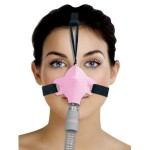
I suffer from CHF and need to use the CPAP. I went thru different masks till I tried the “nose pillow” style. I can lay on my side and it doesn’t leak air into my eyes.
Good luck
Ken
I’ve been having a lot of headaches since I started using my CPAP device. My hope is that they will go away over time.